
 +1 (718) 356-8500

What Type of Tent Do You Need for TV and Film Production in New Jersey?



Tents are a vital component of TV and movie set rental equipment that production teams use to streamline logistics and help integral teams adapt to different locations with varying conditions.
From ensuring crew and cast comfort to providing shelters for caterers to set up, production tents are a temporary, flexible alternative to building structures.
Common Uses for Production Tents
TV and film production crews rely on production tents for multiple purposes.
- Hair and makeup: A spacious tent can provide crew members with enough space to fulfill their responsibilities effectively, whatever the conditions of the filming location. Tents allow cast members to have their hair and makeup done in an organized, well-lit, and sheltered on-set environment.
- Wardrobe: Production tents create shelter for storing cast costumes and wardrobe items, while also giving people privacy when they need to change clothes on a busy set.
- Catering: Filming days can be long, and cast and crew members must refuel between shifts or scenes. Use tents to set up sheltered dining spaces where people can sit, eat, and relax during on-set breaks.
- Shelter: Though most production tents are multifunctional, some production teams use tents specifically to shelter cast and crew members. For example, some filming takes place in harsh environments or extreme weather conditions, and team members need protection and a comfortable place to take refuge.
- Equipment protection: Much of the equipment and gear used during filming is expensive and often fragile. Production tents preserve cameras, monitors, lighting rigs, microphones, and headphones.
- Production office: Many filming locations are remote, and tents can be a dedicated space for the production team to work or a check-in location for cast and crew members.
- Talent holding areas: Actors and other talent need a basecamp tent, or somewhere to wait or rest between scenes. Production crews can customize tents to create a relaxing space for the actors to sit, run lines, or even sleep while on extended shoot days.
- Crew break zones: People need to stay fresh during long workdays. In remote filming locations, crew members have no choice but to take their breaks on-set, and crew tents offer a dedicated space for them to do that.
- Video village/digital imaging station: Directors, producers, directors of photography, and other creative professionals need a dedicated area to view live camera footage. Similarly, digital imaging technicians require privacy to get their work done.
The Best Types of Production Tents for Filming in New Jersey
Various production tents are available for film and TV crews on location in New Jersey. Here are a few factors to consider when choosing:
- The location(s) where you’ll set up
- The available space for the tent
- How long the tent will be in situ
- How many people need to use it and why
- Your budget
Frame Tents
Frame tents are one of the most popular choices for production teams in New Jersey. These freestanding options typically have robust metal frameworks and require no internal poles, offering unobstructed areas to production teams who need a large, sheltered layout. There are multiple types, including clear-top frame tents and high-peak frame tents.
Frame tents should be a go-to choice for production crews who prioritize maximum usable space and weather resistance.
- Freestanding design: Frame tents are self-supporting, with a sturdy metal framework that holds the fabric.
- Versatile setup: Since frame tents don’t typically require stakes to keep them in place, you can set them up almost anywhere, including asphalt, grass, wooden decking, and concrete.
- No internal poles: A frame tent’s interior is completely unobstructed, which is perfect for production teams that require additional flexibility.
- Weather resistance: Frame tents are excellent at withstanding extreme weather conditions, including rain, wind, and snow. Their resilience makes them suitable for daily use in all seasons and almost any environment.
- Customizability: Thanks to their open-plan interiors and robust framework, frame tents are easily customizable to suit the needs of your cast, crew, and production team. From adding HVAC systems to windows and doors, you can accommodate your requirements.
Pole Tents
A pole tent is a versatile solution for production teams who need temporary structures on soft surfaces.
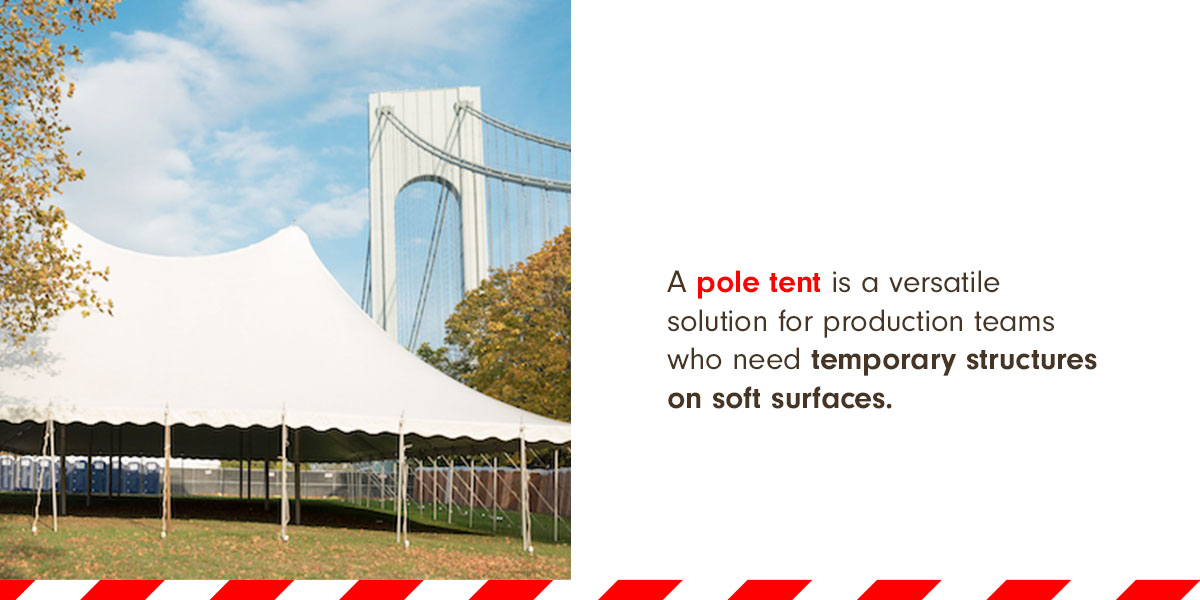
- Central and side poles: Unlike frame tents, pole tents have internal and side poles and hold themselves up using tension.
- Ropes and stakes: Most pole tents require stakes and ropes to anchor the structure to the ground, which can become an obstacle.
- Limited surfaces: Since they require anchoring in the ground, you can only use a pole tent on soft surfaces, such as grass, soil, and some types of gravel.
- Easy setup: Pole tents are generally faster and easier to put up than frame tents, saving valuable time and staff resources.
Production teams should choose pole tents when they intend to position the tents on soft ground and don’t require open-plan interiors.
Possible uses for pole tents include:
- Background talent holding areas
- Cast and crew break areas
- Storage for non-fragile equipment and props
Clear-Top Tents
Clear-top tents combine functionality with aesthetics, providing natural light and a sleek appearance alongside weather resistance. Frame and pole tents are available with clear-top options, which are ideal for production teams who need natural lighting and have fewer privacy concerns.
Clear-top tents may be optimal for hair and makeup and catering areas, but are typically less suitable for wardrobe departments and video villages.
Sidewall Add-Ons
For an added layer of weather protection, privacy, and functionality, you can add sidewalls to your chosen tent. Many temporary structures on film and TV production sets can benefit from having enclosures for:
- Costume, wardrobe, and changing
- Cast holding areas
- Equipment storage
- Crew break zones
Tent wall add-ons are available in various options to suit your preferences, such as:
- Solid fabric
- Mesh
- Clear plastic
- Solid with windows
Permitting Considerations
When you rent or install commercial film production tents in NJ, you must research the applicable regulations.
According to the New Jersey Uniform Fire Code, all tents over 900 square feet require a Type 1 permit, and multiple tents set up within 5 feet of one another also constitute one tent.
High-Quality Film and TV Production Tent Rentals in New Jersey
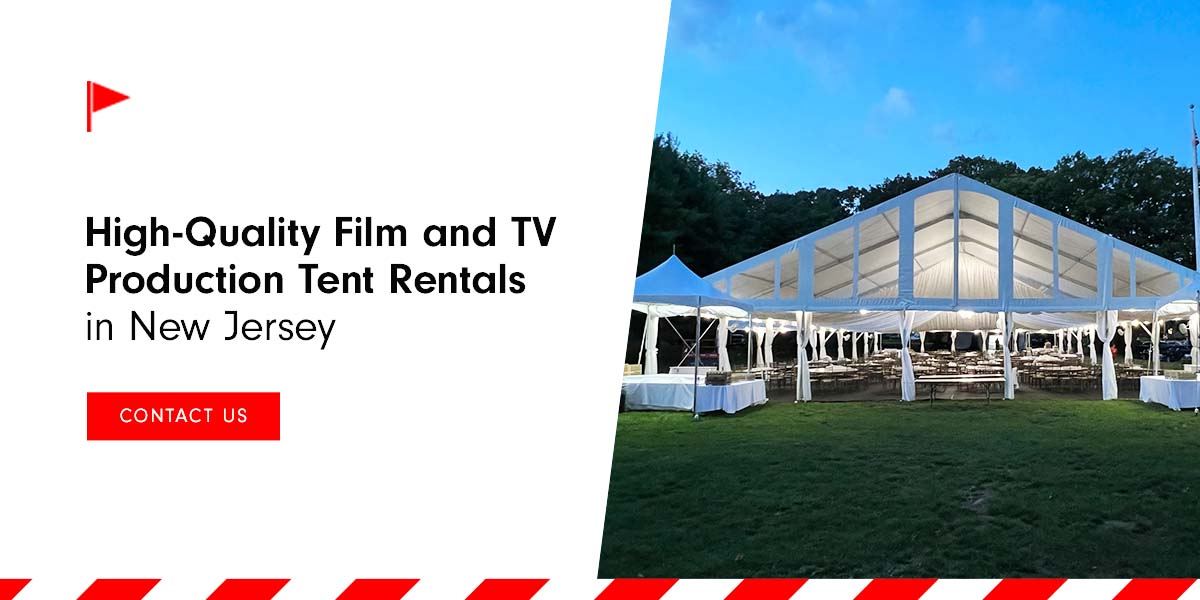
Cabaret Tent Rental provides TV and film crews with high-quality, reliable tents to suit their fast-paced projects and dynamic requirements.
We offer a wide selection of tent sizes and styles that function in a range of environments. Whatever your temporary structure needs, we can fulfill them.
To learn more about our New Jersey production tent rental services, fill out our contact form or call us at 929-299-0651 today.